Nestled in the heart of County Kerry lies Killarney, a place of unparalleled natural beauty and rich cultural heritage, known worldwide for its stunning landscapes, pristine lakes, and unique wildlife.
Killarney now aims to become the ‘Most Sustainable town in Ireland‘ (Independent, 2024), with a focus on preserving the jewel in its crown, the Killarney National Park, along with its surrounding woodlands, mountains and lakes. This area in Kerry was designated a UNESCO Biosphere Reserve in 1982 and is a treasure trove of biodiversity.
Many parts of the National Park have been undisturbed for hundreds of years, allowing a wide variety of flora and native fauna to flourish, some of which are unique to Ireland (National Parks, 2024).
In being more sustainable in the way we live, work and use things, we can “meet the needs of the present without compromising the ability of future generations to meet their own needs” (UN Sustainability).
In this post, we will explore why sustainability in Killarney is not just important, but imperative, in protecting and preserving this ecological wonder for generations to come. We will also look at how Killarney, with the support of visitors, communities and local businesses, can be a more sustainable destination.
A Natural Gem Under Threat:
Killarney’s charm draws millions of visitors each year. However, this increasing influx of tourists can also pose significant threats to its fragile ecosystem. Overcrowding, pollution, and habitat disruption can harm the very attractions that bring people to Killarney in the first place. In 2022, Fáilte Ireland put a 5 year plan in place called the Killarney Destination and Experience Development Plan (KDEDP).
This plan aims to continue the vision of Killarney becoming a world class destination that “is strongly differentiated through the integration of its stunning natural environment with a quality urban visitor experience“, while also working towards being a more sustainable tourism destination (Fáilte Ireland, 2022).
The Richness of Biodiversity:
Killarney National Park is home to a diverse range of flora and fauna, including otters, a wide range of bird species and the famous native red deer. These are the last surviving indigenous herd of red deer in Ireland and have been here since Neolithic times (National Parks, 2024). The breeding season, known as the ‘rut’ brings many visitors to Killarney in late Sept/October, when Stags can be heard loudly bellowing their mating call, and locking antlers with each other in the fight for their females.
The delicate balance of this ecosystem is easily disrupted, making it essential to adopt sustainable practices to protect its precious inhabitants.
The Importance of Conservation:
Efforts to conserve Killarney’s biodiversity are crucial not only for the sake of the park itself but for the planet as a whole. Preserving natural habitats and preventing species extinction contribute to global conservation goals and mitigate the impacts of climate change.
Within the park, the Reenadinna Woods is the largest area of yew woodland in Western Europe and is designated as a Special Area of Conservation. Trees within it are estimated to be between 200 and 250 years old (National Parks, 2024).
Many rare plants and flowers are dotted throughout the park. A particular favourite is the Killarney Fern, Trichomanes speciosum, which we took our name ‘Fern+Fia’ from. This fern stands out for its rarity in Ireland and is listed under the Flora Protection Order (1999). It favours a humid, frost-free environment and is one of only three European species with translucent leaves. You can find it growing near waterfalls, in rock crevices and under over-hanging rocks which provide the fern with dark, sheltered sites, allowing it to thrive (National Parks, 2024).
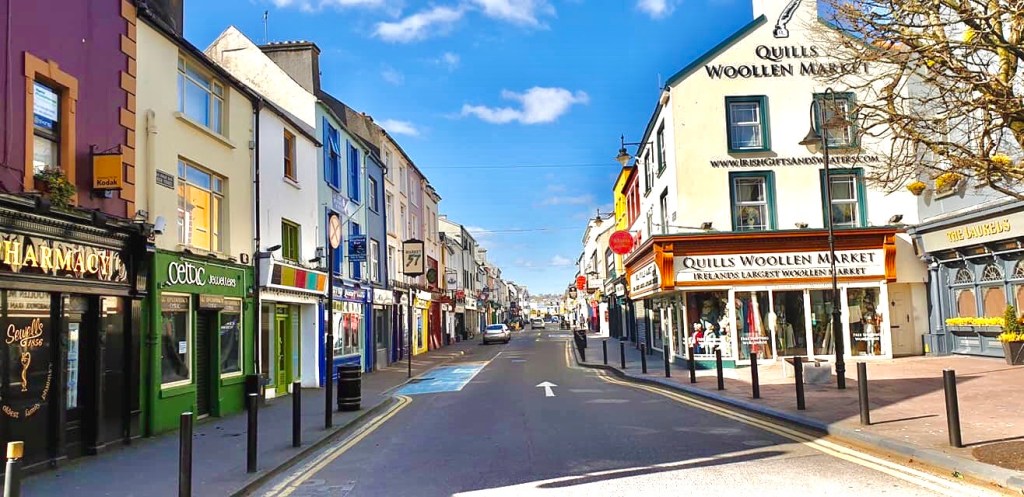
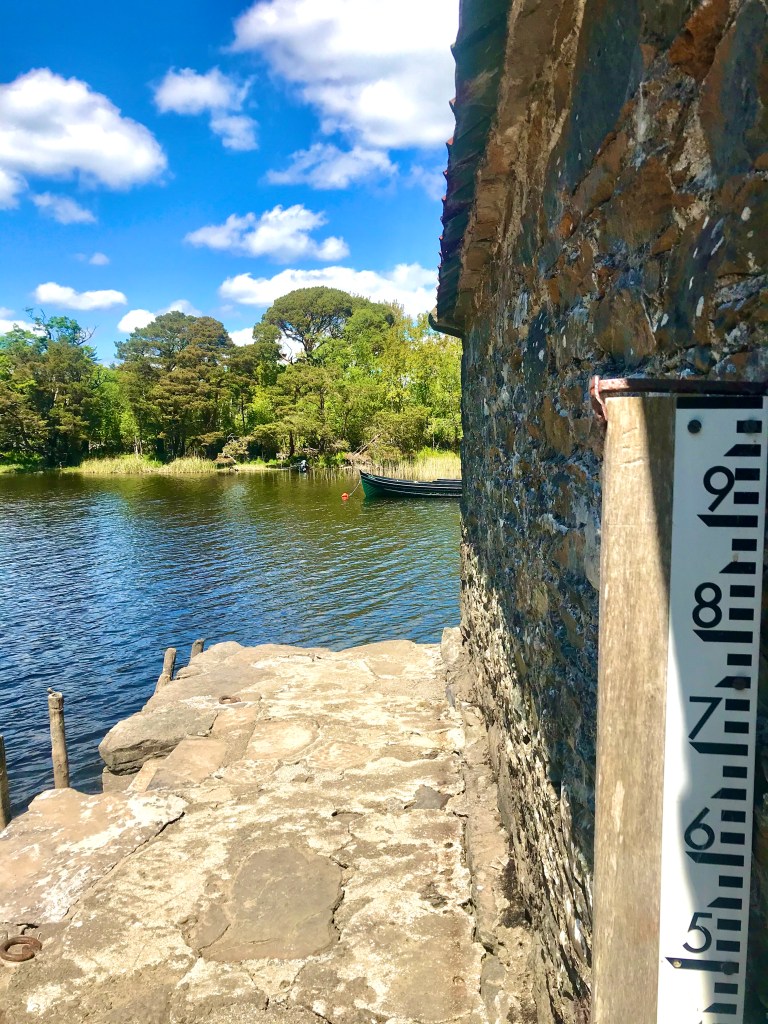
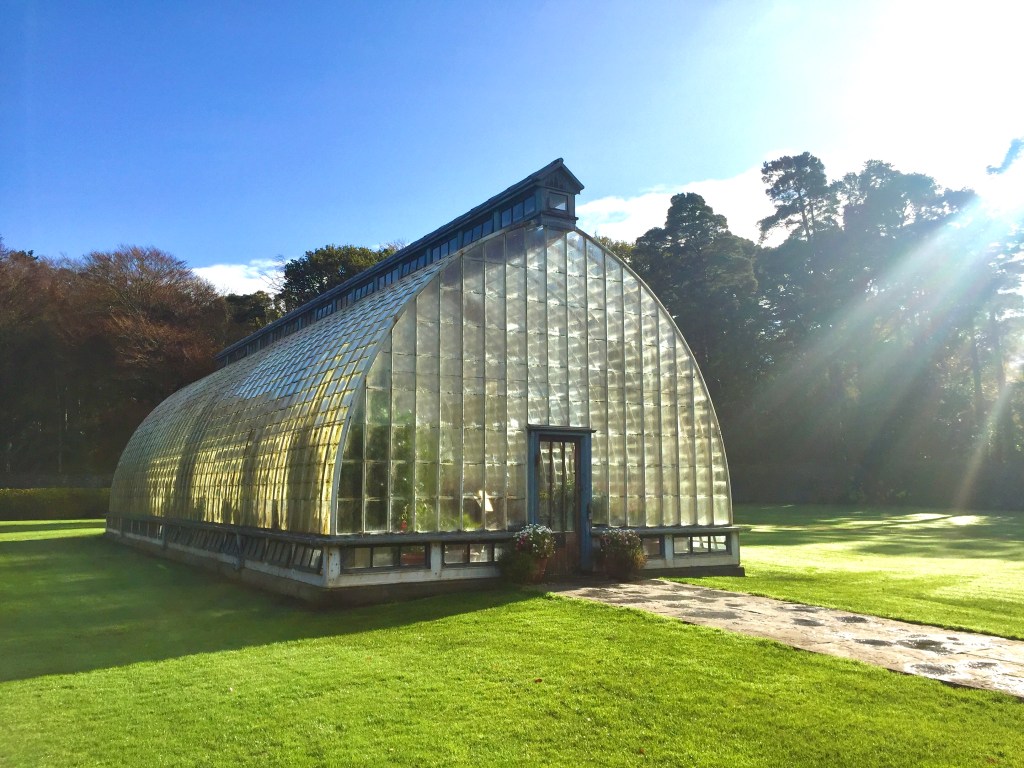
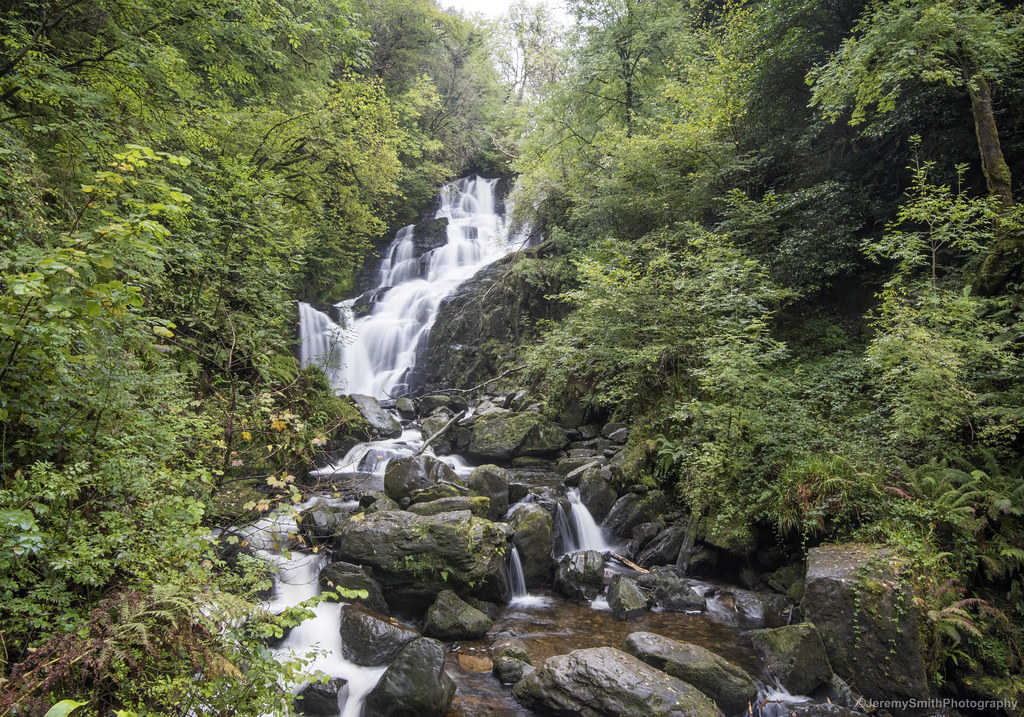
Images: Killarney Town/Killarney National Park
Sustainable Tourism:
To strike a harmonious balance between tourism and conservation, sustainable tourism practices are key. Local authorities, businesses, and tourists can make changes and work together to reduce their ecological footprint. Examples could include responsible waste disposal, eco-friendly transportation options, and supporting local businesses who prioritise sustainability.
“Tourism that takes full account of its current and future economic, social and environmental impacts, addressing the needs of visitors, the industry, the environment, and host communities.” (World Tourism Organization, 2024)
Dining out is also becoming more eco-conscious in town, with many cafes and restaurants embracing sustainable practices and sourcing ingredients from local farms and suppliers.
One eco-friendly dining experience to try in town, is the Killarney Urban Farm Tour & Taste at the Tan Yard, located at the Plaza Hotel. This offers diners the chance to tour the ‘urban farm’ and learn how food is grown in a sustainable way, without the need for pesticides, ultimately reducing food waste and food miles, and have a delicious 3 course meal in the restaurant afterwards, with produce from this ‘urban’ farm.
The Killarney Urban Farm is Ireland’s first hospitality hydroponic urban farm and is a sustainability initiative of the O’Donoghue Ring Collection. It is located in the heart of the town and services bars, restaurants, and hotels in Killarney (Killarney Urban Farm, 2024).
Community Engagement:
However, sustainability in Killarney isn’t just about protecting nature; it’s also about supporting the local community. By participating in community events and buying locally produced goods with a small carbon footprint, visitors and locals can help contribute to the region’s economic well-being.
One very successful project, launched in July 2023, has been the Killarney Coffee Cup Initiative. Over 50 local businesses agreed to swap their single-use cups in-store and embrace the 2GoCup Deposit and Return scheme as their option for takeaway drinks. The durable 2GoCup costs 2 Euro which you will get back once you return your cup to a wide range of participating outlets.
You also have the option to bring your own reusable cup allowing you to make an individual statement with your colour and design choice. This project was the perfect solution to the throw-away disposable cup problem in Killarney, which were being dumped at a rate of 23,000 cups a week – more than a million a year – adding up to 18.5 tonnes of waste! (2gocup, 2023).
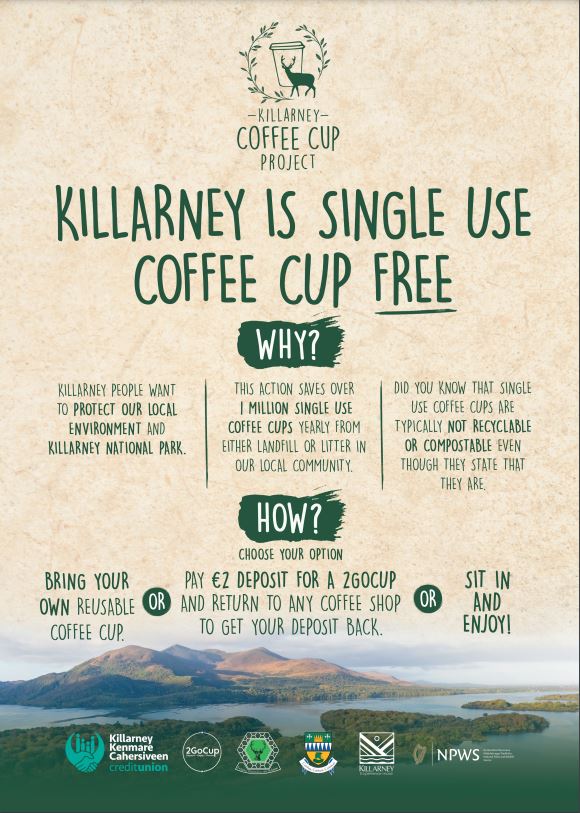
Image: 2gocup
Eco-Friendly Accommodation:
Choosing eco-friendly accommodation options in Killarney, such as lodges or hotels with green certifications, can greatly minimise your impact on the environment while experiencing the beauty of the region. There are many hotels in Killarney who have embraced sustainability and are making positive changes within their industry.
Examples include:
The Killarney Park Hotel: This family run five star hotel has many sustainability initiatives in place, as well as having a dedicated Sustainability Manager to oversee these plans. They are one of the founding members of The Killarney Hotels Sustainability Group, which covers over 3,000 beds, and are committed to protecting the landscape and environment wherever possible.
Some of their actions have also included, cutting out single use plastics, using chemical free ‘green clean’ cleaning products, and charging one euro for unlimited filtered water with proceeds going towards local sustainability projects. The hotel is also powered by 100% Green Renewable Gas and Electricity, which is Carbon Neutral (Killarney Park Hotel, 2024).
The Cahernane Hotel: This hotel located on a private estate on the edge of Killarney National Park is part of the Killarney Hotels Sustainability Group (group of 22 hotels), committed to reducing the environmental impact of their services and activities. They have received accreditation with Green Tourism and have many actions in place to improve their hotel with sustainability as a focus. In 2023, they installed water saving devices, such as low-flow shower heads and tap aerators in 50% of their rooms (Cahernane Hotel, 2024).
Randles Hotel Killarney: This family run hotel is committed to reducing their carbon footprint and minimising energy use, to deliver a carbon-free hotel experience for their guests. Owner ,Tom Randles, has invested in an energy upgrade project since 2020, which brought changes in how their energy was generated, with solar panels installed, as well as heat pumps. (There is a great video about this on their website).
As well as these changes, they have taken action throughout the hotel, from monitoring food waste, installing LED lighting, to eliminating single use plastics and reducing unnecessary printing (Randles Hotel Killarney, 2024).
The Great Southern Hotel: This four star eco-friendly hotel is also part of the Killarney Hotels Sustainability Group. They have removed single use plastics and packaging and grow many of their vegetables and herbs on site, as well as purchasing from local suppliers to reduce their carbon footprint and support the local economy (Great Southern Hotel, 2024).

All who love Killarney know that this stunning place in Ireland deserves our protection and care. By embracing sustainable practices and doing so mindfully, we can ensure that this jewel of nature continues to shine brightly for generations to come.
So, the next time you visit Killarney, remember that your choices can make a positive impact on its future. Let’s ensure that we work together to preserve the magic of Killarney for all to enjoy.
-Stacey @fernandfia
References:
- Cahernane Hotel, 2024: https://www.cahernane.com/en/sustainability
- Fáilte Ireland, 2022: https://online.flippingbook.com/view/730290738/
- Great Southern Hotel, 2024, https://www.greatsouthernkillarney.com/about/sustainability
- Independent, 2024: https://www.independent.ie/regionals/kerry/south-kerry-news/another-first-for-kerry-town-as-it-is-chosen-to-lead-the-way-in-climate-action/a568890057.html#:~:text=As%20part%20of%20this%20a,and%20individuals%20will%20be%20outlined.
- Killarney Park Hotel, 2024: https://www.killarneyparkhotel.ie/sustainability-achievements/
- Killarney Urban Farm, 2024: https://www.killarneyplaza.com/tourandtaste.html
- National Parks, 2024: https://www.nationalparks.ie/killarney/nature-conservation/
- Randles Hotel Killarney, 2024: https://www.randleshotel.com/sustainability
- UN Sustainability, 2024 : https://www.un.org/en/academic-impact/sustainability#:~:text=In%201987%2C%20the%20United%20Nations,to%20meet%20their%20own%20needs.”
- World Tourism Organization, 2024: https://www.unwto.org/sustainable-development
- 2GoCup, 2023, https://www.2gocup.ie/killarney-cup-campaign-2/
 FERN + FIA
Leave a comment